
Why Does My Deadbolt Stick and Stiffen in Summer?
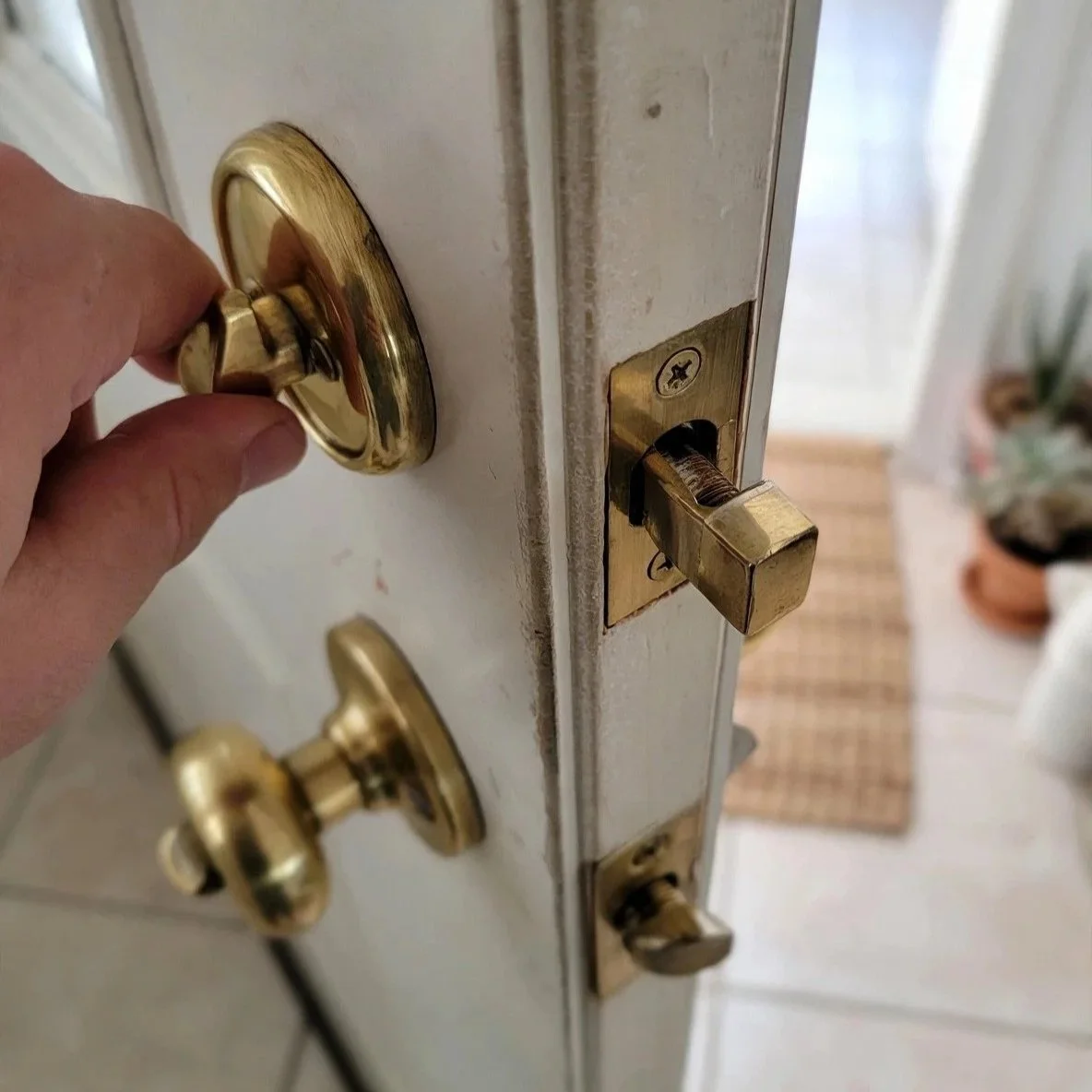
For most of the year the deadbolt turns with a smooth click, and then summer arrives and suddenly you are wrestling the key, leaning a shoulder into the door, and jiggling the handle to get the bolt to throw. It is not your imagination, and the lock did not choose the hottest month to fail on purpose. Heat changes the door, the frame, and the lock itself, and a bolt that was borderline all along starts to bind.
The good news is that a summer-sticky deadbolt usually traces to one of a few heat-driven causes, and most of them are simple to fix once you know what is happening.
Heat Makes Everything Expand
The core reason is simple physics: materials expand when they heat up. Your door, its frame, and the metal parts of the lock all grow slightly in the heat, and they do not all grow the same amount. A wood door and frame swell and shift more than the metal bolt, so the hole the bolt has to slide into, the strike plate opening in the frame, moves out of alignment with the bolt. When the door and frame expand enough, the bolt no longer lines up cleanly, and it drags, catches, or refuses to throw. The metal lock components expand too, which can make the cylinder itself feel stiffer to turn. Everything is a hair bigger and slightly out of place, and the lock is where you feel it.
The Usual Culprits Behind a Sticky Bolt
A few specific things cause most summer sticking, and they often work together.
Door and frame expansion is the big one, and it shows up as a bolt that binds against the strike plate. If you can throw the bolt easily with the door open, but it fights you when the door is closed, the door and frame have swelled and shifted out of alignment. That is a fit-and-alignment problem, not a broken lock.
A dry or dirty cylinder is the second. Lock cylinders need a little lubrication to turn smoothly, and in a hot, dusty environment, the old lubricant dries out, and grit works into the mechanism, so the key turns stiffly regardless of the door. This one gets worse over the years and spikes in the heat.
Foundation and structural movement is the third. As the ground shifts with the seasons, a door frame can move slightly out of square, which changes how the bolt meets the strike. It is subtle, but it adds to the misalignment the heat creates.
| What you notice | Likely cause |
|---|---|
| Bolt throws fine open, binds when closed | Door/frame expanded, alignment off |
| Key turns stiffly regardless of the door | Dry or dirty lock cylinder |
| Worse each year, spikes in summer | Aging cylinder plus seasonal movement |
| Door has to be lifted or pushed to lock | Frame shifted, strike misaligned |
Why Heat and Dryness Make It Worse
In a hot, dry climate, all of these run harder. The sheer temperature swings, blazing days, and cooler nights, make materials expand and contract more than a steadier climate does, so alignment shifts more. Sustained heat also bakes the lubricant out of lock cylinders faster and degrades electronic and keypad locks and key fobs, so both mechanical stiffness and electronic failures cluster in the warmer months. And airborne dust works into cylinders and strike areas and adds grit to the problem. A deadbolt that would be merely a little stiff in a mild, stable climate can become a real fight where heat and dryness pile on, which is one reason summer lock troubles are so common.
What Actually Fixes It
The fix depends on the cause, and forcing the lock is not it, because muscling a binding bolt wears the mechanism and can snap a key. If the bolt binds only when the door is closed, the fix is realigning the door, frame, or strike plate so the bolt lands cleanly again, sometimes adjusting hinges, sometimes filing or repositioning the strike plate. If the key turns stiffly regardless of the door, the cylinder needs cleaning and proper lubrication with a lock-appropriate lubricant, not a heavy oil that attracts dust. If the frame has shifted structurally, the strike and alignment are adjusted to match. Catching it early, before you force the lock daily, keeps a simple adjustment from becoming a broken lock or a lockout.
Frequently Asked Questions
They feel the same at the key but have different fixes, and one test separates them. Throw the bolt with the door open: if it extends fully and freely, the bolt and cylinder are fine, and the issue is where the bolt meets the frame. Then close the door and look at the strike hole. A rub mark or shiny spot on the strike plate shows exactly which edge the bolt is catching: top, bottom, or side. A bolt catching the bottom of the strike usually means a sagging or swollen door; one catching the latch side often means the strike plate itself needs to move a hair. Marking the bolt tip with a marker and throwing it against the strike transfers the contact point so you can see it.
Reach for a dry-film lubricant, powdered graphite, or a PTFE spray that dries to a slick film, not a general-purpose oil like WD-40 or 3-in-1. Oil stays wet and tacky, so it pulls in dust and grit and turns to a gummy paste inside the cylinder that binds the pins worse over a season, which is the opposite of what you want in a dry, dusty climate. Graphite coats the pins without attracting debris; a PTFE product is cleaner to apply and does not blacken your key. Work the key in and out a few times after applying so it reaches the pin stack, not just the keyway mouth.
Often, yes, and it is the first thing to try before touching the strike. A door that has sagged even a couple of millimeters drops the bolt below its strike hole, and the sag usually starts at loose or stripped top-hinge screws carrying the door's weight. Swapping the two short screws in the top hinge for longer ones, roughly three inches, that reach past the jamb into the wall framing pulls the door back up and can re-center the bolt on its own. If the screw holes are stripped, plugging them with glued wood toothpicks or dowels gives the new screws something to bite. Only if lifting the door does not realign the bolt do you file or reposition the strike plate.
Not necessarily. A dry PTFE or graphite lubricant is used in locks because oil attracts grit that gums the pins, but the two parts favor different forms of it. Powdered graphite suits the cylinder, since it works down into the tight pin stack without leaving a film that later cakes. A dry PTFE film suits the bolt, latch, and strike contact, while a thin, slick coating reduces metal-on-metal drag as the bolt throws. Apply a small amount to each, work the bolt and key several times, and wipe any excess so nothing sits on the surface to catch dust.
Yes. Muscling a binding bolt or cranking hard on a stiff key stresses the lock mechanism and can snap the key off in the cylinder or break internal parts, turning a minor alignment or lubrication issue into a full lock replacement or a lockout. When a lock starts fighting you, it is better to diagnose and adjust it than to force it repeatedly.
Heat attacks them in two ways. It drains batteries faster, since a lithium or alkaline cell loses capacity as temperature climbs, so a keypad lock baked on a south-facing door goes from a low-battery warning to dead sooner than the app estimates, and a weak battery often shows first as a motor that throws the bolt slowly or stalls partway. It also stresses the small motor and gear train that drives the bolt, and if the mechanical deadbolt is already binding from an expanded door, the motor has to fight that resistance and can strain or fail trying. Fixing the mechanical alignment first often clears an electronic lock that seemed to be failing on its own, and using fresh lithium cells rated for high temperature helps it ride out summer.
Alignment and a Little Care Solve Most of It
A deadbolt that sticks in summer is almost always telling you that heat has expanded the door and frame out of alignment, or dried out and fouled the cylinder, often with a little structural movement mixed in. None of that means the lock is beyond help. Realigning the door and strike, cleaning and properly lubricating the cylinder, and catching it before you force the bolt daily are what bring a smooth turn back. In a hot, dry climate, especially, a little care keeps a summer annoyance from becoming a lockout.
If your deadbolt is fighting you in the heat, we can realign, service, or replace it before it leaves you locked out. KwikPick Lock and Safe serves the Phoenix West Valley. Call (623) 300-1889.
