
Rekey or Replace a Lock? The Choice That Saves You Money
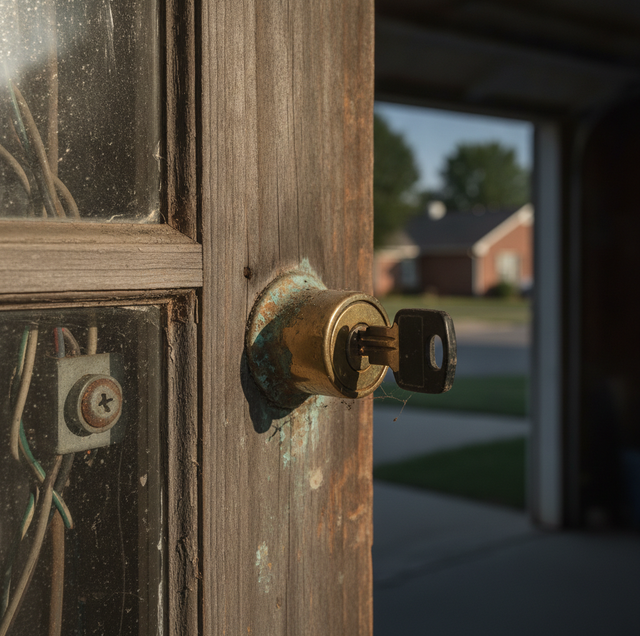
Two phrases get used as if they mean the same thing, and they cost very different amounts of time and money. Rekeying and replacing both ends with a lock, the old key no longer opens, so people assume they are interchangeable. They are not. One keeps all your existing hardware and changes only the key that fits it. The other pulls the whole unit off the door and puts a new one in its place. Knowing which one your situation actually calls for is the difference between a quick service call and buying hardware you did not need.
Quick Answer: Rekeying changes the key, not the lock: a locksmith adjusts the internal pins in your existing cylinder so the old key no longer works and a new one does. Replacing swaps the entire lock for a new unit. Rekey when the hardware is fine and you only need to control who has a working key. Replace when the lock is worn, damaged, or you want a different type or higher security grade.
What Rekeying Actually Does
Inside almost every standard door lock sits a cylinder, and inside that cylinder is a row of small spring-loaded pins. Each pin is cut to a specific height. When you slide in the correct key, its ridges push every pin to exactly the right level, allowing the cylinder to turn and the bolt to move. A key that does not match leaves at least one pin in the wrong position, so nothing turns.
Rekeying works on that pin arrangement. A locksmith opens the lock, removes the cylinder, and swaps the existing pins for a different set cut to different heights. Those new heights are matched to a new key. Once the swap is done, your old key no longer lines the pins up correctly, so it stops working, and the new key becomes the only one that does. The lock body, the deadbolt, the handle, the strike plate, and the finish on your door: none of it changes. Only the internal combination and the key that fits it are different.
That is the whole appeal of rekeying. You keep the hardware you already own and paid for, and you walk away with a lock that the previous keys cannot open. It is fast because the locksmith is working with parts already installed. It is economical because you are buying a small handful of pins and a service call, not a new lock. And because the pin heights are set by the locksmith rather than the factory, several locks can be set to the exact same combination so one key opens all of them, which is worth remembering if you are tired of juggling a ring of mismatched keys.
What Replacing a Lock Involves
Replacing is exactly what it sounds like. The existing lock, cylinder, and hardware are removed from the door, and a brand-new unit is installed in their place. You are not adjusting anything internal; you are removing one product and installing another.
There are honest reasons this becomes the right call. A lock that is physically worn out, where the key sticks, the cylinder grinds, or internal parts are failing, cannot be fixed by changing its pins, because the problem is the hardware itself. Corrosion, a bent bolt, or a cylinder that no longer holds its parts firmly all point in the same direction. Beyond simple failure, replacement is also how you change what kind of lock guards the door. If you want a smart lock with a keypad or phone control, a heavier-duty model, a bump-resistant or pick-resistant cylinder, or a different finish and style to match new hardware, none of those live inside your current lock, so the current lock has to go.
Replacement gives you a clean slate. It costs more than rekeying and takes a bit longer, but it is the only path when the hardware is failing or when you want features and durability that the old lock was never built to provide.
The One Real Difference to Keep Straight
Here is the distinction that clears up almost every case. Rekeying changes the key. Replacing changes the lock.
If your hardware is in good shape and your only goal is to make sure the right people have a working key and the wrong ones do not, you are changing the key, and rekeying is your answer. If the hardware itself is the problem, or you want the lock to be or do something it currently is not, you are changing the lock, and replacement is your answer. A good way to test yourself: if you crossed out every key in the world and started fresh, would this lock still be one you are happy to keep? If yes, rekey. If no, replace.
When Rekeying Is the Right Move
Certain situations almost always point to a rekey rather than a full swap.
- You just moved into a home: You have no idea how many keys the previous owner, their family, agents, or contractors still hold. Rekeying makes every one of those keys useless in an afternoon.
- You lost a key: A key out in the world is a key someone could find. Changing the pin combination retires that lost key instantly.
- Someone who had a key no longer should: A former tenant, a roommate who moved out, a worker you gave temporary access, an ex: rekeying cuts them off without touching the door hardware.
- You are tired of carrying five keys: If your front, back, garage, and side doors all take different keys, a locksmith can rekey them to one shared combination so a single key opens the lot.
In each of these, the lock itself is fine. What has changed is who you trust with access, and access is controlled by the key, so the key is what needs to change.
When Replacing Is the Right Move
Other situations call for new hardware, no matter how much you would rather save the money.
- The lock is failing: Sticking, grinding, a key that only turns if you jiggle it, a bolt that no longer seats cleanly: worn parts do not get better, and rekeying cannot repair them.
- You want a real upgrade: A smart lock, a keypad entry, a higher-grade deadbolt, or a bump- and pick-resistant cylinder are features your current lock does not contain. You get them by installing a lock that has them.
- The look or type is changing: New door, new finish, switching from a knob to a lever or from a basic latch to a deadbolt: these are hardware decisions, not key decisions.
- The lock is damaged: Rust from moisture or grit, metal that expands and no longer moves smoothly, or a cylinder missing internal pieces cannot be reliably serviced and should be swapped.
The theme here is the reverse of rekeying. The key is not the issue; the hardware is, either because it has stopped working well or because you want it to be a better piece of hardware than it is.
Why the Lock's Condition Decides Everything
One point trips people up, so it is worth stating plainly. Rekeying is only possible on a lock that already works. The locksmith needs a functioning cylinder to open, disassemble, re-pin, and reassemble. If the lock is broken, seized with corrosion, or missing internal parts, there is nothing sound to re-pin, and forcing the issue produces a lock you cannot trust. In that case, replacement is not a preference; it is the only reliable option. So before you decide between the two on price alone, the lock's physical condition often makes the decision for you: a healthy lock can go either way, but a failing one has already chosen replacement.
A Quick Word on Security Grades
When you do replace, you get to choose a security grade, and it helps to know what the label means. Residential and commercial lock hardware is commonly rated Grade 1, Grade 2, or Grade 3 under industry standards. The grade describes durability: how many operating cycles the lock is built to survive and how much force it is designed to withstand. Grade 1 is the most rugged of the three, Grade 3 the most basic. Rekeying never changes a lock's grade, because you are keeping the same hardware. Replacement is the moment to step up, so if your current locks are a lower grade, a swap is your chance to move to something built to withstand more abuse rather than reinstalling the same tier.
None of this means rekeying is the lesser choice. For a huge share of real situations, moving into a new place, losing a key, ending someone's access, it delivers the same practical security as a new lock for a fraction of the effort, because a rekeyed lock is every bit as close to the old keys as a brand-new one would be. The right answer is simply whichever one matches what actually changed: the people who should have a key, or the hardware on your door.
Frequently Asked Questions
A residential cylinder usually holds five or six pin stacks, and rekeying swaps only the bottom pins for a set of heights matched to a new key. The springs and top pins stay put. The old key can no longer push the new bottom pins into alignment, so it stops turning, while the new key lines them up. None of this touches the lock body, which is why the hardware on your door looks and works exactly as it did before.
Usually not. Rekeying makes the lost key useless because it resets the pin combination the key has to match, and the missing key was cut for the old combination. Unless the lock is physically damaged, you end up with the same security as a brand-new lock while paying only for a rekey, so a single lost key rarely justifies the cost of new hardware.
Yes. Because a locksmith sets the pin heights by hand during a rekey, several separate locks can be re-pinned to the same combination, so one key opens all of them. This is called keying alike, and it is one of the more common requests after someone moves into a home where the front, back, and garage locks all came with different keys.
Replacing is the better call when a lock is past its wear life or has been forced, since either can leave a bent cam or a worn cylinder that a rekey simply cannot cure. It is also the move when you want a higher security grade or a smart lock. Rekeying keeps the existing hardware, so it cannot repair failing internal parts or add capabilities the old lock never had, such as a keypad or phone control. When the hardware itself is the limitation, a new unit is the fix.
The grades come from ANSI/BHMA standards and rate how many cycles and how much force a lock withstands in testing, rather than anything about the key. Grade 1 withstands the most cycles and force, Grade 3 the least. Since rekeying reuses your current lock, replacement is the opportunity to step up to a higher ANSI/BHMA grade rather than putting the same lower-grade lock back on the door.
It works on a lock that is functioning and in good condition, because the locksmith needs a sound cylinder to re-pin and reassemble. A badly corroded cylinder, or one already forced with a sheared or missing pin, cannot hold a new pinning reliably, so it is replaced rather than rekeyed. The physical condition of the cylinder, not the type of lock, decides whether rekeying is even on the table.
Ask a locksmith whether a rekey or a full replacement fits your situation before you buy new hardware — get the right fix without paying for parts you do not need. KwikPick Lock and Safe serves the Phoenix West Valley. Call (623) 300-1889.
