
Rekey Every Tenant Turnover? A Property Owner’s Decision Framework
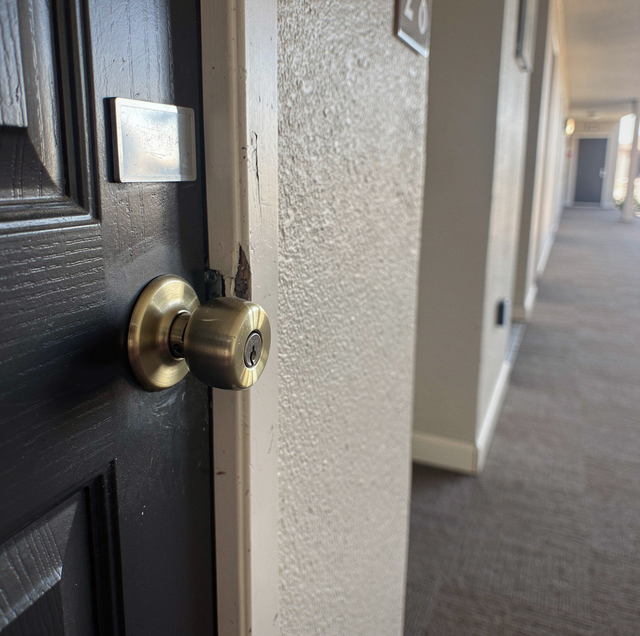
A property manager hands over forty units a year. A small landlord hands over one, maybe two. A business owner hands a suite to a new tenant every few years and rarely thinks about the locks at all until something goes wrong. All three are facing the identical question at the moment keys change hands: does the door need a new combination, or does it need new hardware? Treating that question as an afterthought is how a property ends up with a lock nobody can account for.
Why Tenant Turnover Puts Key Control In Question
Every occupant who ever held a key to a unit could have made a copy, handed one to a partner, a cleaner, a contractor, or simply lost one without telling anyone. None of that shows up on a move-out checklist. You can count the keys someone returns to you. You cannot count the keys that were made and never came back, and that gap is the whole problem.
Think of it the way an office manages a shared login. When an employee leaves, the account password is reset, not because the employee is assumed guilty of anything, but because no one can verify how many people ever saw the old password. A door lock works the same way. The moment a tenancy ends, the pool of people who can operate that lock includes everyone the outgoing occupant ever told, whether or not you were informed.
For a landlord, this is a plain exposure question. For a business owner leasing out a suite, an office, or a warehouse bay, the same logic applies to commercial rekey situations: staff badges get returned, but a metal key handed to a contractor two tenants ago rarely does. In both cases, the safest assumption at turnover is that the previous key population is unknown and should be treated as retired and untrusted.
Rekeying In Plain Terms
Rekeying changes what a lock will accept as a valid key, without swapping the hardware itself. A locksmith opens the cylinder, replaces the small pins inside with a new set cut to a different combination, and issues fresh keys matched to that new arrangement. The deadbolt, the strike plate, and the exterior finish stay exactly as they were. Only the internal code changes, which is why rekeying takes far less time on-site than removing and installing new hardware.
Replacement is a different job entirely. The whole lock mechanism comes off the door, and a new unit goes in, usually because the existing hardware itself is the problem rather than who holds a key to it. A master-keyed arrangement sits alongside both options: a locksmith can set several units so that each tenant's key also works with a single master key, allowing an owner or manager to carry a single key for service access while every occupant still has their own unique key.
The distinction matters because the two solve different problems. Rekeying answers "who can get in," while replacement answers "is this hardware still doing its job?" A property that only needs the first answered doesn't need new hardware, and a property with worn or damaged locks won't fix that problem by rekeying alone.
When Rekeying Covers The Risk
Rekeying is the right call for most turnovers when the hardware itself has no issues. If the deadbolt throws smoothly, the strike plate lines up, and nothing grinds or sticks, the only open question is who might still hold a key, and rekeying closes that question completely. A fresh pin combination makes every prior key, known or unknown, physically incapable of operating that cylinder.
This covers the routine case for most single-family rentals, apartment units, and small commercial suites: an outgoing occupant who leaves without incident, hardware in normal working order, and a new occupant arriving within a short window. It also covers situations where a key was lost mid-lease rather than at turnover; rather than waiting to find out whether the lost key surfaces in the wrong hands, rekeying at that point removes the guesswork.
Cost and disruption favor rekeying whenever it's an option, since it takes a fraction of the time a hardware swap does and leaves the door looking exactly as it did. If a unit turns over on a predictable schedule, building a rekey into the standard move-out process, done in the vacant window between the old tenant's exit and the new one's arrival, keeps the door under one clean key population without ever leaving a gap.
When Replacement Is The Better Call
Several situations tip the decision toward new hardware instead of a fresh pin combination.
The lock itself is failing: A deadbolt that needs force to throw, a cylinder that grinds, or a knob with noticeable play is past the point where a new combination fixes anything. Rekeying a failing mechanism just gives it a new code to fail with. A unit changing hands is a natural point to replace hardware that was already on borrowed time.
A prior break-in or forced entry occurred: A lock that was pried, drilled, or bumped during a break-in may have hidden damage to the pins or housing even after repair. Fresh hardware removes that uncertainty entirely rather than layering a new key onto a mechanism with an unknown history.
The security grade no longer fits the use: A retail space storing higher-value inventory, an office holding client files, or a rental in a building that has had recurring lockout or tamper incidents may call for a higher-security cylinder, anti-pick pins, or a keyway that resists casual duplication at a hardware counter. That's a hardware upgrade, not a rekey.
You're moving to keyless or electronic access: Switching to a keypad, fob system, or app-based lock so future turnovers only require deleting an old code, no locksmith visit needed, is a hardware decision made once that pays off across many future tenants.
The doors don't match. A property with three or four exterior doors on mismatched brands and keyways can't be keyed alike until the hardware is compatible. If the goal is one key per tenant across every entry, replacing a lock or two to get there is often unavoidable.
A Four-Step Framework For Every Turnover
Rather than deciding case by case from scratch, a short framework applied at every handoff keeps the choice consistent.
Step one: inventory who held keys: Note how many keys were issued, how many were returned, and whether any lease or agreement mentioned duplicates made for a partner, roommate, or contractor. This doesn't need to be exhaustive; the point is simply to register that an unknown population exists, which it almost always does.
Step two: inspect the hardware itself: Before deciding anything, have the lock checked for smooth operation: does the bolt throw fully, does the key turn without force, is the housing intact? This step alone usually settles whether rekeying is even on the table.
Step three: match the finding to the decision: Hardware in good condition with no security-grade concerns points to rekeying. Hardware showing wear, damage, mismatch, or a desired upgrade points to replacement. A unit moving to keyless entry has its old lock replaced regardless of the lock's condition, since the goal is an entirely different access method.
Step four: schedule it in the vacant window and log it: Whichever path applies, complete the work between the outgoing occupant's exit and the incoming occupant's arrival, and keep a simple record of the date and what was done. That record becomes useful the next time the same unit turns over, since it tells the next manager exactly what hardware and keying arrangement is already in place.
Applying The Framework Across A Portfolio Or Commercial Building
A single rental owner can run this framework informally, on a unit-by-unit basis, as leases end. A portfolio manager or a building with several commercial suites benefits from treating it as a standing policy rather than a judgment call each time: rekey by default at every handoff, flag any unit whose hardware inspection reveals wear or a mismatch, and route those units for replacement instead.
For a multi-suite commercial building, staff and vendor turnover complicates the same picture. A departing tenant business might leave behind keys held by former employees, cleaning crews, or delivery services that were never tracked the way a residential lease tracks keys. Master-keyed arrangements help here too, letting building management retain one working key for common access while each suite keeps its own current combination. The same four steps apply; only the number of doors and the number of past keyholders tend to be larger.
Whatever the scale, the framework keeps the decision from becoming a debate every single time a lease or contract ends. Hardware condition and known keyholders are the only two factors that matter, and once those are checked, the rekey-or-replace answer tends to be obvious rather than debated.
Frequently Asked Questions
Not exactly. A fully electronic lock with no mechanical cylinder doesn't get rekeyed; codes and fobs are simply deleted and reissued. Many smart locks retain a physical key override for battery failure or lockouts, and that override cylinder should be rekeyed at turnover, just like a standard deadbolt, since a mechanical bypass defeats the purpose of changing the electronic code.
Rekeying suits a suite that turns over occasionally and where a handful of physical keys is manageable. An access control system makes more sense once a building has frequent staff changes, multiple entry points, or a need to see who entered and when. The deciding factor is usually turnover frequency: infrequent handoffs rarely justify the switch, while frequent ones often do.
A properly set master-key system lets a locksmith rekey the affected unit's cylinder to a new individual combination while reprogramming it to still accept the same master key. The rest of the building's units and their master access stay untouched, so one lost key doesn't force a rebuild of the entire system.
Exterior doors carry the real exposure, since those are the entry points a former keyholder could use. Interior doors, closets, and storage rooms within a single unit are a lower priority unless they lead to a shared or common area accessible to other tenants or the public.
A rekey of a standard residential or light-commercial cylinder is usually completed on-site within an hour for several doors, since only the internal pins change. Replacement takes longer per door because the entire mechanism has to come off, be fitted, and tested, which is one more reason routine turnovers lean toward rekeying whenever the hardware allows.
Only when the incoming and outgoing keyholders are effectively the same population, such as a lease renewal with the same occupants or a family member taking over with the same returned keys. Any turnover involving a new, unrelated occupant should default to rekeying, since the entire rationale of the framework rests on the keyholder population actually changing.
Schedule a turnover rekey or hardware assessment — get a clear read on which doors need a new combination and which need new hardware. KwikPick Lock and Safe serves the Phoenix West Valley. Call (623) 300-1889.
