
Key Broke Off Inside the Lock? How to Get It Out
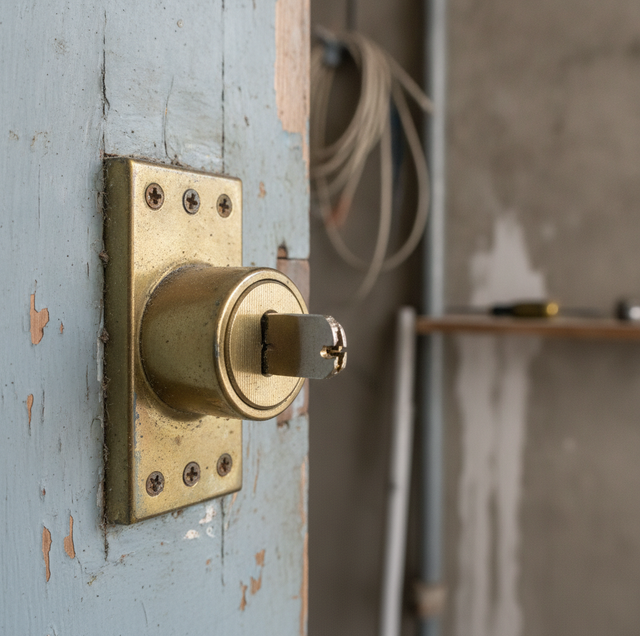
The moment a key snaps, half of it is still in your hand, and the other half is buried in the keyway, flush or nearly flush with the face of the lock. That sinking feeling is normal, and so is the urge to act quickly. Slow down for a second. What you do in the next few minutes decides whether this is a five-minute fix or a job that ends with a drilled-out cylinder. The broken piece is usually still seated where the working key would sit, which means the pins inside are lined up the way they were when it snapped. That alignment is the thing you want to protect.
First, Leave the Door Alone
Before you reach for any tool, stop touching the door itself. Do not shove your shoulder into it, do not jiggle the handle back and forth, and do not try the other half of the key by pressing it against the broken stub to "push it through." Every one of those moves drives the fragment deeper into the cylinder, where it is far harder to grip and far harder to jam against the pins.
Take a look at how the key broke. If a small metal tab is sticking out past the face of the lock, you have the best-case version of this problem and a decent shot at pulling it yourself. If the break is flush with the face or sitting below it, inside the keyway, your options narrow fast, and you should read the section on when to stop before you make it worse.
One more thing to check: the plug's rotational position. If the key snapped while you were turning it, the cylinder may be rotated partway. Leave it exactly where it is. The pins only clear the shear line at the positions the key cuts put them, so rotating the plug back to a "neutral" spot can bind everything and trap the fragment.
If the Broken Piece Is Sticking Out
When you can see and reach the end of the fragment, a straight, patient pull is the whole technique.
- Grip the exposed tab with needle-nose pliers or a good pair of tweezers. Get as much of the metal in the jaws as you can, rather than pinching the very tip.
- Pull straight out, in line with the keyway. Do not twist, pry up, or lever the piece sideways. A sideways force snaps the tab off again, leaving you with nothing to hold.
- If it resists, add a shot of spray lubricant. A dry-film or PTFE lubricant made for locks is ideal because it does not gum up the pins the way heavy oil can, but even a general penetrating spray will help the fragment slide. Give it a minute to work its way down the keyway before you pull again.
- Keep the cylinder in the same rotational position the entire time. If the plug wants to turn as you pull, let it stay put rather than forcing it back.
If two or three calm attempts get you nowhere, resist the temptation to grip harder and yank. That is how a workable stub becomes a flush break.
Hooking Out a Piece You Cannot Grip
When the fragment sits inside the keyway with nothing to grab, the goal shifts from pulling to hooking. Locksmiths use a broken-key extractor for this: a thin, flexible steel tool with tiny barbs or a hook along one edge. You slide it into the keyway alongside the blade of the key, catch one of the cuts or the tip, and draw the fragment straight out while the barb holds it.
If you do not own an extractor, a thin, stiff blade can stand in for one. The teeth of a coping saw, or narrow jigsaw blade, are a common improvised tool. You feed the blade in beside the key with the teeth angled toward it, hook a tooth into one of the key's cuts, and pull both out together. It takes a light touch and often a few tries. Two blades, one down each side of the keyway, sometimes pincer the fragment better than one.
Two rules apply no matter which tool you use. First, keep everything moving along the axis of the keyway, straight in and straight out, never levering against the walls of the cylinder. Second, keep that plug in its original rotation. If you free the fragment even a couple of millimeters, stop and switch to pliers or tweezers on the newly exposed end.
Why the Key Snapped in the First Place
A key almost never breaks for no reason, and this matters because getting the fragment out does not fix the cause. Keys are typically cut from brass or a nickel-brass alloy, which is soft enough to duplicate easily and, over years of use, soft enough to wear thin at the shoulders and cuts. A worn original that has been in a pocket for a decade is brittle in the places that carry the most stress.
Cheap duplicates make it worse. A copy cut slightly off, or stamped from thin blank stock, flexes more than the original and fails sooner. But the bigger culprit is usually the lock, not the key. When a cylinder binds, when the plug sticks, when grit and old grease make it stiff, you instinctively apply more twisting force to turn it. That extra torque is what finally shears a tired key. A key that snaps is very often a lock telling you it needs service. If you extract the fragment and keep using the same sticky lock, you are lined up to break the next key too.
Getting the Lock Working Again
Once the fragment is out, do not celebrate by forcing the spare key in and cranking it. Test gently. A lock that made a key snap has some resistance you want to find and address, not muscle through.
Clean and lubricate the cylinder with a dry-film lubricant. Work it in and out with a good key a dozen times to distribute it. If the plug still turns rough, drags, or catches at a certain point, the cylinder itself is worn or fouled and needs a locksmith's attention. From there, the choice is usually rekey or replace. Rekeying keeps the existing hardware and swaps the internal pin stacks so a new key operates it, which is the right call when the lock body is sound, and only the keying or the wear is the issue. Replacement means new hardware entirely, which makes sense when the cylinder is damaged, the finish is failing, or you want an upgraded lock. A locksmith can tell you which by feeling how the plug moves once the debris and the old key are gone.
When to Stop and Call for Help
There is a clear line where do-it-yourself ends. Call a locksmith when the fragment is flush with or below the face of the lock, and you cannot get any tool to bite, when repeated attempts have only pushed the piece deeper, when the lock is on a door you cannot afford to be locked out of, or when you simply do not have an extractor or a thin blade on hand. A pro carries extractors in several profiles and can often pull the piece in minutes without harming the cylinder. If the plug is damaged, they can remove the whole cylinder from the door to work on it from the back, which is not something to attempt blindly. Knowing when to make the call is what keeps a broken key from turning into a door-hardware replacement bill.
What a Broken Key Is Really Telling You
A snapped key is a small emergency that almost always ends fine if you keep your head. Protect the fragment's position, pull or hook it straight out, and treat the lock afterward as the thing that actually needs attention. The break was a symptom. The sticky, aging cylinder underneath it is the part worth fixing so you are not standing at the same door with the same problem in a few months.
Frequently Asked Questions
The failure point is almost always the shoulder and the deepest cuts of the blade, where the metal is thinnest and carries the most twisting load. Brass and nickel-brass keys fatigue over the years, the way a paperclip does when you bend it repeatedly. What tips a tired key over the edge is extra torque, and that torque usually comes from a lock that has gotten stiff. So the real cause is often a binding cylinder, not a defective key. Pull the piece out, but leave the lock stiff, and you have simply reset the clock on the next break.
Often, yes, if you keep both halves and neither is chewed up. A key cutter or locksmith can read the cuts from the pieces and, if the break is clean, line them up to duplicate the pattern or read the depths directly. The catch is that if the fragment is worn down, mangled by pliers, or missing a chunk at the break, the copy inherits those flaws. When the halves are questionable, it is more reliable to decode the lock or cut a fresh key to the cylinder's actual pinning than to copy a failed key.
Do not apply superglue to the stub and the spare key to "weld" it back together, a widely shared trick that almost always glues the fragment to the pins and turns a simple extraction into a cylinder replacement. Do not push the piece deeper, hoping it will fall out the back; most cylinders are closed on the far side. Do not force the door with your shoulder or a pry bar, as this stresses the latch and frame without addressing the key. And do not keep yanking sideways with pliers once a pull has failed, because that shears off whatever tab you had to grip.
Usually not, if the fragment comes out cleanly. The break itself rarely harms the pins or the plug; the damage comes from what people do trying to extract it, such as drilling, gluing, or jamming tools against the pin chambers. A clean pull with an extractor leaves the cylinder fully usable. The exception is a lock that was already failing, which caused the break, so even an undamaged cylinder may still need a rekey or service to prevent it from stiffening up again.
When the break is flush or recessed, there is no tab to grip, so pliers and tweezers are useless, and the entire job depends on hooking a cut from inside the keyway. The fragment also tends to sit deep against the pins, where any misdirected force presses it tighter rather than freeing it. Improvised blades work less reliably here because there is little room to angle a tooth into a cut. This is the point where the effort-versus-damage math usually favors a locksmith, who has slim extractors shaped for exactly this and can pull the cylinder if needed.
Yes, and it is mostly maintenance. Lubricate your locks a couple of times a year with a dry-film or graphite-based lubricant rather than heavy oil, which attracts grit and gums the pins. Replace keys that have visibly thinned or bent at the cuts instead of babying them along. Stop relying on one worn original as your everyday key; cut a fresh copy from a lock decode, not from the tired original, so you are not duplicating its wear. And if a lock has started to stick or drag, have it serviced before it demands the extra force that snaps the next key.
Broke a key off in your lock or dealing with a stubborn, sticking cylinder — KwikPick Lock and Safe offers mobile, damage-free extraction, rekeys, and lock repair. KwikPick Lock and Safe serves the Phoenix West Valley. Call (623) 300-1889.
