
How to Choose a Home Safe: Match the Rating to the Risk
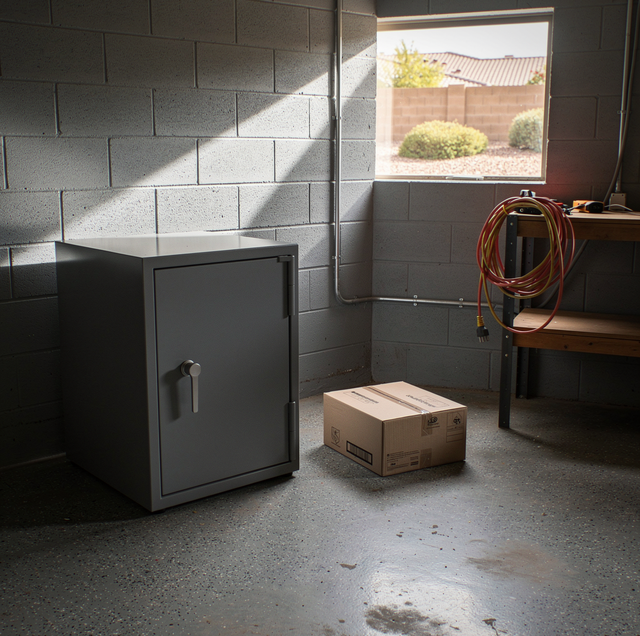
Quick Answer: Pick a home safe by matching its ratings to your actual risk. Decide whether you need fire protection, burglary protection, or both, then choose a type and rating that fits what goes inside. Buy larger than you think, anchor it to the floor or wall so it cannot be carried off, and confirm the fire or security label is real, not a marketing sticker.
Buying a home safe feels simple until you stand in the aisle and realize the boxes that look identical protect against completely different things. A container that shrugs off a house fire may offer almost nothing against a pry bar, and a heavy steel burglary safe can cook its contents in a fire. The right choice starts with one question you answer before you look at a single model: what are you protecting your valuables from?
Fire Versus Burglary: Two Different Jobs
Fire protection and theft protection pull a safe's design in opposite directions. A fire safe uses thick, insulated walls filled with a material that releases moisture as it heats, keeping the interior below a target temperature while flames surround it. That insulation makes the walls bulky but not especially hard to break into. A burglary safe uses dense steel and a hardened door to resist drilling, prying, and cutting, but bare steel carries a fire's temperature straight to the contents, so a pure burglary box offers little fire defense.
Most homeowners need some of both, which is why combination fire-and-burglary safes exist. They cost more and weigh more because they carry both the insulation and the steel. Deciding your priority first tells you which rating to read closely and which to treat as a bonus.
The Ratings That Actually Mean Something
Ratings are where marketing language and real testing part ways. A few labels carry weight.
Fire ratings describe how long the interior stays below a stated temperature during a controlled furnace test. You will see figures like 30, 60, or 120 minutes paired with an interior ceiling, often around 350 degrees Fahrenheit for paper. A UL-listed fire label means an independent lab verified the claim, which is different from a vague "fireproof" printed on the box. No safe is truly fireproof; every one is fire-resistant for a rated span, and a longer rating buys more margin if the fire department takes a while to arrive.
Burglary ratings measure resistance to forced entry. A UL Residential Security Container (RSC) rating is the common baseline for home safes and reflects a set attack time against hand tools. Heavier commercial constructions carry B-rate or C-rate labels, which describe steel thickness in the body and door rather than a tested attack, so read those as build specs, not a pass or fail. The higher you climb, the more the safe weighs and the harder it is to defeat quickly.
Water resistance matters more than people expect, since firefighting and flooding both soak a room. A separate water rating tells you how long the safe keeps its interior dry under submersion, which protects documents and drives that survive the fire but drown in the aftermath.
Matching the Type to Your Needs
Once you know your risk, the type follows.
Fire document and media safes protect papers, photos, and digital media from a fire's high interior temperatures. A media-rated model holds a lower interior temperature because drives, discs, and film degrade well below the point at which paper chars.
Burglary safes trade insulation for steel and are built to slow down a determined thief. These suit cash, jewelry, and small valuables where theft is the main worry.
Gun safes are tall burglary-style cabinets sized for long guns, usually with rack systems inside and often a fire rating layered on top.
Wall and floor safes hide in framing or a slab. A wall safe fits between studs and disappears behind a picture; a floor safe sits in concrete and resists both prying and fire because the surrounding mass shields it.
Diversion safes disguise storage as an ordinary object like a book or a wall outlet. They defeat a casual snoop, not a real search, so treat them as a decoy layer rather than primary protection.
The line that trips people up is the difference between a cheap "fire box" and a true rated safe. A lightweight lockbox from the office aisle may resist a small kitchen flare-up for a few minutes, but it has no verified rating and pops open under mild force. Confirm a real UL or equivalent label before you trust anything valuable to it.
Lock Types: Convenience Against Longevity
The lock is where daily use and long-term reliability trade off, and each style has a clear personality.
Dial combination locks are mechanical, need no batteries, and last for decades, but they open slowly, and a forgotten combination means a locksmith visit.
Electronic keypad locks open in seconds and let you change the code yourself, though they run on batteries and the keypad wears with heavy use.
Biometric locks read a fingerprint for the fastest access of all, useful when speed matters, but sensors can misread, and they depend on power.
Key locks are simple and cheap, yet a key can be copied, lost, or picked, so they suit low-stakes storage.
Whatever you pick, plan for the electronics to fail eventually. A good electronic or biometric safe includes a mechanical override, and you should keep fresh backup batteries on hand plus a plan for the override key or code stored somewhere separate from the safe itself.
Buy Bigger Than You Think
Almost everyone outgrows their first safe. Collections of documents, jewelry, and firearms accumulate, and the item you buy the safe for is rarely the last thing you put in it. Interior space also shrinks fast once insulated walls and shelving eat into the footprint, so a box that looks roomy in the store holds less than the outside suggests.
Think of a safe the way you think of a closet: you fill whatever space you install, and the version you wish you had bought is always one size up. Estimate what you own now, then add room for a few years of growth, especially if you plan to add firearms or a document archive.
Installation and Anchoring: The Step That Stops Theft
Here is the single most important thing you can do, and it costs almost nothing: bolt the safe down. An unanchored safe, no matter how thick its steel, can be tipped onto a dolly and wheeled out the door, then opened at leisure somewhere private. Most quality safes come with pre-drilled anchor holes and hardware for exactly this reason.
Bolt the safe to a concrete slab with masonry anchors, or fasten it through the floor into joists, or into wall studs for a wall unit. A properly anchored safe forces a thief to defeat the lock and body on site, under time pressure, which is where the burglary rating finally does its job. Skipping this step wastes the money you spent on that rating.
Bolt the safe down. An unanchored safe, no matter how thick its steel, can be tipped onto a dolly and wheeled out the door, then opened at leisure somewhere private. Most quality safes come with pre-drilled anchor holes and hardware, so fasten it to a slab, floor joists, or wall studs and a thief has to defeat it on site.
Where to Put It
Placement blends secrecy with practicality. The master bedroom closet is the first place a burglar looks because it is the first place everyone hides things, so a less obvious spot buys you time. Interior locations near the center of the house also survive fire longer, since exterior walls fail first.
Keep the safe above potential flood level. A basement or ground-floor slab can take on water during a burst pipe or storm, and even a water-resistant safe has limits. A shelf or platform that lifts the unit off the floor helps in flood-prone spots. Balance all of this against weight: a heavy safe needs solid support and a route that can bear it, so plan the location before delivery day.
What Belongs Inside, and What Does Not
A home safe is for the things you need quick, private access to and cannot easily replace: passports, birth certificates, property deeds, insurance records, a little emergency cash, jewelry, and backup drives. Media and electronics need a media-rated interior because they fail at temperatures paper survives, so store drives and discs only in a safe rated for them.
Some items belong elsewhere. Keep at least one copy of vital documents off-site, ideally in a bank safe deposit box or a trusted second location, so a total loss of the house does not erase everything. A home safe protects against common events; an off-site copy protects against rare catastrophic ones. Together, matched to real ratings and bolted down, they give you protection that actually holds.
Frequently Asked Questions
The moisture-based insulation inside a fire safe is sealed and generally lasts the life of the unit, but a safe that has already been through a fire should be retired. The insulation discharges its protective moisture once, so a scorched safe that looks intact will not perform a second time and should be replaced rather than reused.
Not by itself. Weight often comes from fire insulation, which does nothing against a drill, or from thin steel over a large body. Read the actual rating and the steel gauge in the door rather than judging by heft, because a compact RSC-rated box can outperform a heavier unrated cabinet against forced entry.
Those spots are usually poor choices. Garages and attics swing through wide temperature ranges that stress electronics and can warp door seals over time, and garage safes sit in the most accessible, least observed part of the house. If you must use a garage, anchor it into the slab and avoid storing temperature-sensitive media there.
A relocker is a secondary bolt that fires automatically if someone attacks the lock or drills the door, jamming the safe shut so the damaged lock cannot release it. Better burglary safes include one or more relockers, and their presence is a useful sign you are looking at a serious security build rather than a decorative cabinet.
At least one trusted person should know how to open it in an emergency, since a safe that only one person can access becomes a problem during a medical event or after a death. Store the combination or override method in writing somewhere secure and away from the safe, such as with an attorney or in a separate sealed location, not taped inside a nearby drawer.
They can be, but the lock is the risk. A previous owner may still know the combination, and older electronic locks may lack current tamper features. Have the lock replaced or recombinated by a locksmith before trusting a used safe, and verify the rating label is still legible and matches a real listing rather than a repainted mystery box.
Have a locksmith help you choose, install, and anchor the right safe — protection only works when it is bolted down and set up correctly. KwikPick Lock and Safe serves the Phoenix West Valley. Call (623) 300-1889.
