
Mailbox Lock Broken or Jammed? What You Can and Can’t Fix
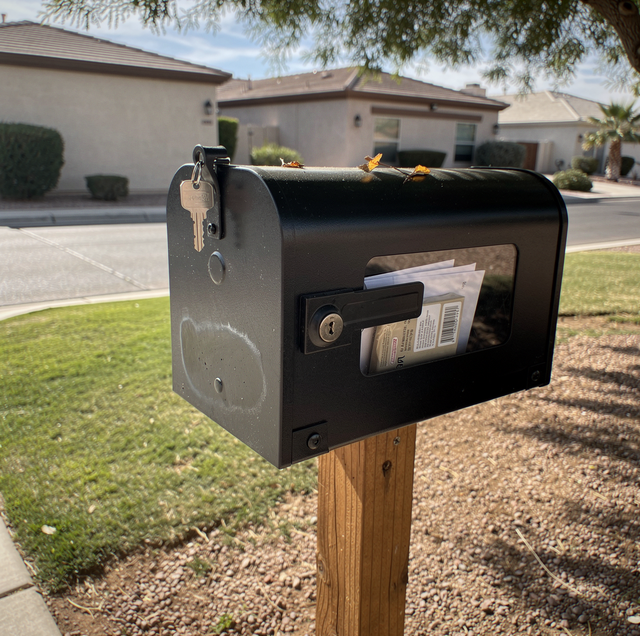
You are standing at the mailbox with your key turned halfway, and it stops. It won't go forward, and it won't come back out easily either. Through the little door you can see your mail stacked against the glass, and your hand is starting to ache from working the key back and forth in front of you.
That gap between a key that used to turn and one that suddenly won't is common, and usually it isn't a mystery. Your mailbox lock is small and exposed, taking daily wear from heat, grit, and the one-handed key you turn while juggling packages against your hip. Some of what's stopping you, you can check yourself. Some of it needs a locksmith as soon as you find it.
What Wears Out First in a Mailbox Lock?
Most residential and cluster mailboxes use a small cam lock: a short cylinder that rotates a metal cam to release the door latch, not a bolt that slides into a frame. It's a simpler mechanism than a house lock, and that's exactly why it wears in fewer, more predictable places. The pins inside the cylinder wear the same way a house lock's pins do, but a cam lock's pins are smaller, and its spring tension is lighter, so grit and corrosion show up faster.
Sustained heat plays its part too. A mailbox sits in direct sun most of the day, and the metal housing and cam expand as it heats up, then contract again overnight. That daily cycle loosens screws, shifts the cam's resting position, and dries out whatever lubricant was left in the cylinder. Add the fine dust a windstorm drives into every exposed seam, and a mailbox lock works against more than ordinary wear, cycling through heat and grit every day.
What You Can Try Before Calling Anyone
Start with the key. A worn or slightly bent key sticks in a lock that's otherwise fine, so try a spare if you have one, or hold the two side by side and look for a rounded edge or a bend. If the spare turns smoothly, the key was the problem, and a fresh cut solves it.
If the key looks fine, check the keyway before reaching for a lubricant. Dust, dead insects, and bits of junk mail collect inside a mailbox cam lock, and a flashlight shows a blockage you can't feel with the key alone. A can of compressed air or a soft brush clears debris without pushing it deeper into the pins. Once the debris is gone, work a dry, graphite-based lubricant into the keyway instead of a household oil; graphite won't leave a tacky residue the way oil does, and it restores smooth movement to a lock that's simply gritty, not damaged.
What you shouldn't do is force the key. A key that resists steady, gentle pressure is telling you the resistance is mechanical, and forcing it is how a stiff lock turns into a snapped key stuck in the cylinder.
Signs the Lock Itself Has Failed
A cam lock that's moved past simple grit shows different symptoms. A key that turns freely with no resistance at all, instead of the expected click-and-stop, usually means the cam has sheared off the tailpiece inside, so the key spins the plug without moving the latch. A key that seats but won't turn past the same point, even after cleaning, points to a bent or corroded pin.
The door itself can tell you something too. A latch that no longer holds the door flush, or a door that rattles even when the key sits in the locked position, means the cam or the strike has worn or shifted. None of these are conditions a lubricant or a spare key can correct, because the damage is inside metal parts that have already deformed.
What a Locksmith Repairs or Replaces On-Site
A locksmith working on mailbox hardware is usually solving one of three problems: a worn or sheared cam, a cylinder that needs new pins, or a lock swapped for one that fits the same mounting hole and cam length as the original. Cam locks come in a range of cam shapes and lengths, built to match specific mailbox and parcel-box models, so a repair visit typically starts with measuring your existing hardware rather than guessing at a universal fit.
Rekeying is often on the table at the same visit, especially for a cluster mailbox where a unit has changed hands or a key was lost. Rekeying changes the pins so a different key operates the lock; the box and its mounting stay untouched, while only the pin set and the key change. For a private, single mailbox, this is usually the fastest path once wear has passed what cleaning and a fresh key can solve, and it leaves you with a lock that looks and sits exactly as it did before.
Replacement becomes the better call once the housing is bent, the latch no longer holds a closed door under normal pressure, or the cam has broken in a way a pin change won't correct. A locksmith carrying a range of cam lengths can usually match a new lock to your box on the spot, without ordering a part and coming back a second time.
Where the Fix Stops Being a DIY Job
There's a real limit to how far you should take any of this, and it isn't about tools. Working a stuck cam lock open without its key, whether by force, by improvising a pick, or by any method meant to bypass the mechanism, sits outside what this article walks through. A mailbox lock exists to keep mail secured, and defeating it is a different act from repairing it, one this piece leaves alone on purpose.
A snapped key inside the cylinder falls in that same category. Pulling at it with pliers or a wire tends to push the broken piece deeper, not free it, and once a key has broken off flush with the face, clearing it takes tools built for that exact job. That's the plain edge of what a cleaning, a lubricant, and patience can do for you.
Frequently Asked Questions
Yes, in most cases. A worn cam or a stuck cylinder can usually be repaired, or swapped for a new lock that fits your existing mounting hole, so the rest of your mailbox stays fully untouched, door and frame included.
No. Forcing a key that resists steady pressure is one of the most common ways a stiff lock turns into a snapped key wedged in the cylinder, and that repair costs you more time and more money than the stuck lock you started with.
A stuck key still meets resistance, and you can usually work it loose with light pressure and a dry lubricant. A broken cam lets your key spin freely with no resistance at all, since it's no longer connected to the latch that holds the door shut.
Sometimes, if the replacement cylinder can be keyed to match what you already carry. More often, a new lock arrives with its own key, and rekeying the box afterward brings your old key back into service, so you know which one you'd rather carry day to day.
The cam-lock mechanism is much the same, but cluster units are built to a shared standard, making it easier for a technician to source a matching cam length. If you manage a cluster box, expect a technician to service your compartment without disturbing the units around it, keeping the visit quick and simple.
Stop trying to turn or remove it yourself. Pliers and wire tend to push a broken key deeper into the cylinder, not free it, and working at it that way risks damaging pins that were otherwise fine. A locksmith carrying the right extraction tool can usually clear the broken piece, and if the wear that caused the break has weakened the lock, they can tell you on the spot whether repair or replacement makes more sense for you.
Get a stuck or jammed mailbox lock looked at before you force it — a locksmith can tell a worn cam from a failed cylinder and fix the right one for good. KwikPick Lock and Safe serves the Phoenix West Valley. Call (623) 300-1889.
