
Leaving Your Home Empty for the Season: A Lock Checklist
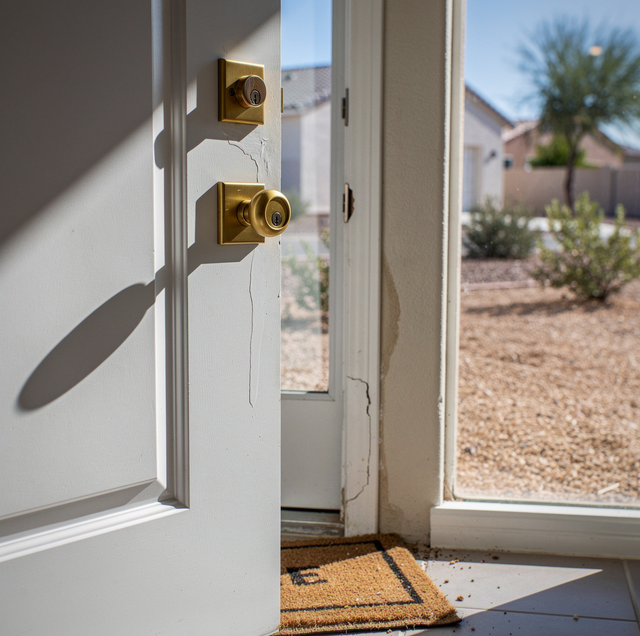
A house that sits empty for ten weeks every year while its owners head somewhere warmer doesn't know the difference between the owner walking up the driveway and someone holding a spare key that was handed out to a house-sitter three house-sitters ago and never came back. An occupied home resets its own risk every day: a propped door gets noticed, a package left too long gets brought inside, a window left cracked gets closed. A vacant one resets nothing. Whatever gap exists in the locks and keys on the day you leave is still sitting there, unchanged, on the day you get back, unless it gets closed before you pull out of the driveway.
Why An Empty Home Changes The Security Math
A lock doesn't care who's holding the key. It only checks whether the shape matches, and that's exactly why an extended absence turns small, ordinary gaps into real exposure. A sticking deadbolt that a homeowner has learned to jiggle into place becomes a door that nobody tests for weeks at a stretch. A smart lock running on batteries that were "probably fine" becomes a lock that quietly dies in month two, with no one there to notice until the app stops responding. None of these problems are new when you leave; they're just no longer being managed day-to-day, which is the entire difference between a normal week and a long vacancy.
The fix isn't a single new gadget. It's going through the same handful of questions a locksmith would ask about a rental turning over between tenants, applied instead to a home about to sit empty: who still has a working key, does every lock that matters actually work, and who's covering access if something comes up while you're gone.
Start With Who Actually Has A Key
Think through every key that's been handed out since you moved in, not just the ones you remember returning. A landscaper who used to let himself in for a side-yard job. A house-sitter from two trips ago. A prior owner's contractor who never turned in a copy. A neighbor holding a spare "just in case" that hasn't been mentioned in years. None of that shows up anywhere unless you sit down and count it, and the honest answer for most homes that have been lived in for more than a couple of years is that the number of working keys in circulation is higher than anyone assumes.
If that list includes anyone you can't fully account for, or anyone whose relationship with the property ended on bad terms, a rekey before departure closes the question outright. A locksmith opens the cylinder, swaps the small pins inside for a new combination, and cuts fresh keys to match. The exterior hardware looks and feels exactly the same; only the internal code changes, so every old key, remembered or forgotten, stops working the moment the new pins go in. Scheduling that a week or two before you leave, rather than the morning of, leaves time to test every new key in every lock before you're the one locked out.
Smart Locks Need A Power Plan For A Long Absence
A keypad or app-controlled lock that's fine for daily use can become a liability across a multi-month vacancy if nobody planned for the battery to run out. Most residential smart locks run on standard AA or coin-cell batteries rated for roughly six months to a year of normal use, but extended heat exposure on an entry facing full sun shortens that considerably, and a lock left cycling through failed attempts (a curious neighbor kid, a delivery driver checking the wrong door) drains a battery faster than steady daily use ever would.
Before departure, install a fresh set of batteries rather than relying on whatever's already installed, and confirm the lock still has a working mechanical key override. Nearly every electronic deadbolt keeps a small keyway for exactly this situation: a locksmith should rekey that override cylinder at the same time as the rest of the house, since a forgotten mechanical bypass defeats the purpose of a fresh electronic code. If the lock connects to a home network for remote access or alerts, keep in mind that only the notifications depend on that connection; the lock itself still operates on battery power and keypad input even if the internet goes down or the hub loses power during a storm.
Check Every Secondary Entry Point Before The Front Door Locks Behind You
Front door hardware gets the most attention because it's the door everyone uses, which is exactly why it's usually the door in the best condition. The entry points that cause problems during a long absence tend to be the ones nobody thinks about daily: the garage service door, a side gate latch, a sliding glass door with a thin factory lock, a pet door sized for something bigger than the family dog, or a detached shed or casita with hardware that hasn't been touched since it was installed.
A sliding door benefits from a secondary bar or pin in the track in addition to its built-in latch, since that latch alone is often the weakest point on the entire house. A garage keypad code is a lock in every practical sense and should get reset before a long trip the same way a physical lock would, since a code shared with a contractor, a teenager's friend, or a service tech years ago rarely gets removed once the job is done.
| Entry Point | Common Weak Spot | Before You Leave |
|---|---|---|
| Garage service door | Older lockset, rarely inspected | Test the deadbolt, confirm it fully engages |
| Side or backyard gate | Simple latch, easily lifted | Add a keyed latch or padlock if none exists |
| Sliding glass door | Factory latch alone | Add a track bar or secondary pin lock |
| Garage keypad | Old shared code | Reset the code before departure |
| Pet door | Size allows entry | Cover or lock it while the home is empty |
| Detached shed or casita | Original, untouched hardware | Rekey or upgrade if it shares a key with the house |
Give One Person Emergency Access, Not A Handful Of Keys
An empty home still needs a way in if a pipe lets go, a storm drops a branch on the roof, or an alarm company calls, and nobody answers. The instinct is often to hand out several copies "just in case," which recreates the exact key-control problem the rest of this list is trying to solve. A cleaner solution is picking one trusted person, a family member, a close neighbor, a property manager, and giving that single point of contact one clear way in: a clearly labeled key kept somewhere secure, or a temporary code on a smart lock that gets deleted the day you return.
A keypad's temporary or one-time code is worth using here if the lock supports it, since it can be issued for the exact window of the trip and expire automatically rather than sitting active indefinitely. A physical lockbox works the same way for a mechanical lock: mount it out of view from the street, use a resettable combination rather than a fixed one, and change that combination once the home is occupied again, the same way a code shouldn't outlive its purpose on any other lock in the house.
Build A Pre-Departure Checklist You Actually Follow
Running through this once, on paper or in a phone note, beats trying to remember it all the morning of departure. A short sequence works for almost any length of absence:
Audit who has keys: List every key you know was issued and flag anyone whose copy you can't account for.
Schedule a rekey if the list raises questions: Do it early enough to test every new key before you leave, not on the way out the door.
Replace smart lock batteries and confirm the mechanical override: A dead battery two states away is a problem nobody can fix remotely.
Walk the property for secondary entry points: Garage door, gate, sliding door, pet door, detached structures, anything with its own lock or latch.
Set exactly one emergency access method: A single trusted keyholder or a temporary code, not several loose copies handed out informally.
Do a final walkthrough the day before you go: Confirm every door you checked earlier still locks the way it did when you tested it.
None of these steps takes long individually. Together, they turn a house that would otherwise sit exposed on its own schedule into one where every point of entry has a known, accounted-for answer to the question of who can get in while you're gone.
Frequently Asked Questions
A week or two ahead works better than the day of departure, since it leaves time to test every new key in every affected lock and catch a cutting error or a sticky cylinder before you're the one standing outside unable to get back in.
Not necessarily. A master-keyed arrangement lets a locksmith set several exterior locks so each still uses its own key while also accepting one master key, which is useful if a trusted keyholder should have one key for the main entry without also holding separate keys for a shed or gate.
No. Losing a network connection only affects remote notifications and app control; the lock still operates through its keypad and physical key override on battery power alone, which is why keeping a spare set of batteries in the property (or fresh ones installed before departure) matters more than the wifi signal.
Yes, provided it uses a resettable combination rather than a fixed factory code, gets mounted somewhere not visible from the street or driveway, and has its code changed once the home is occupied again so the same combination doesn't stay active indefinitely.
Both are physical openings large enough to matter and are easy to overlook because they're not thought of as locks. A mail slot cover or an interior block for a pet door removes that gap for the length of the trip without any permanent change to the hardware.
Yes. A shared code accumulates the same way a key does, handed to a contractor, a house-sitter, or a teenager's friend over the years, and a code that's never been reset is functionally the same risk as a key nobody remembers issuing.
A home doesn't need new hardware on every door to sit empty safely for a season. It needs an honest count of who still holds a key, a working battery and a backup plan for anything electronic, a walk-around of every entry point that isn't the front door, and one clear answer for who gets in if something comes up while you're gone. Handle those four things before the car is packed, and the house you come back to is the same one, under the same key control, as the one you left.
Schedule a pre-departure lock and key audit — get every entry point checked, rekeyed if needed, and one emergency access plan set before you leave. KwikPick Lock and Safe serves the Phoenix West Valley. Call (623) 300-1889.
