
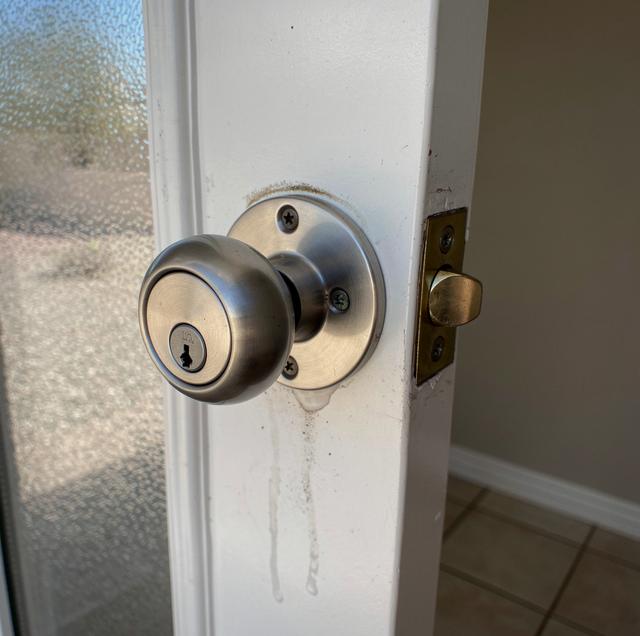
High-security and standard deadbolts do the same job on the surface: a cylinder turns, a bolt throws, the door locks. What separates them is whether they sit inside the cylinder and who can get a working key cut. A high-security lock adds resistance to picking, bumping, and drilling that a standard deadbolt doesn't carry, plus control over who can duplicate your key once it exists. Neither one, on its own, fixes a weak strike or a soft frame; that part of a door's security is determined elsewhere entirely, and a cylinder upgrade can't reach it. Weighing the two means separating what the cylinder itself controls from what the door and the people holding keys still control regardless of which cylinder sits inside it. Each factor, from pick, bump, and drill resistance to key control, spare keys, and rekeying, lines up against both locks here.
| Factor | Standard Deadbolt | High-Security Lock |
|---|---|---|
| Pick resistance | Lower; standard pin tolerances | Higher; added locking element raises the skill and time needed |
| Bump resistance | Vulnerable to a struck key transferring shock through the pins | Resists it; the added element doesn't move with a bump |
| Drill resistance | Minimal; pins reachable with a standard bit | Hardened inserts block the fastest path to the pin stack |
| Key duplication control | Any hardware store or kiosk can cut a copy | Restricted keyway; copies need an authorized channel |
| What the bolt and strike anchor into | Depends entirely on installation, same as any lock | Also depends entirely on installation; the cylinder upgrade doesn't change it |
| Getting a spare key | Cut on the spot at any hardware store or kiosk | Through the authorized dealer only |
| Rekeying later | Any locksmith can rekey it | Needs a locksmith with the matching blanks and authorization |
What the Upgrade Resists
A high-security cylinder raises the bar on the three ways a lock gets defeated without a key. Picking gets slower because a second locking element must also be satisfied, in addition to the pins. Bumping stops working on designs where that element does not move with a struck key. Drilling meets hardened inserts placed where a bit would otherwise reach the pin stack, and a bit that strikes one dulls instead of cutting through. None of that changes how the key turns or how the bolt throws; the resistance is built into parts you never touch.
Key Control When Keys Leave Your Hands
The upgrade also controls who can get a spare cut in the first place. Its keyway is restricted, so a copy has to come from an authorized channel rather than any rack of blanks; the same key-control idea a business scales up into a full master key hierarchy when more than one tier of access is involved. The risk of an unauthorized copy begins whenever a key leaves your hands for any length of time: a cleaning crew, a contractor, a former employee, or a tenant who's moved on all had a working key at some point, and with a standard deadbolt, nothing stops any of them from having had a copy cut at any counter first. A restricted keyway doesn't eliminate that risk, but it closes the easiest version of it, since a copy now has to be traceable to an authorized person rather than remaining anonymous at a counter. For a household, that risk centers on a handful of people; for a business handing out keys to staff and vendors on an ongoing basis, it's the difference between a key ring you can account for and one you can't.
The Door, Frame and Strike Around the Cylinder
None of that resistance means anything if the door around the cylinder gives way first. A kicked door can give way at the strike before the cylinder is ever tested, when the plate tears out of thin jamb stock that was never meant to carry an impact on its own. A strike reinforced and anchored into the solid framing behind the jamb, not just the jamb board itself, with screws long enough to pass through that jamb board and bite into the stud framing behind it rather than stopping short in wood too thin to carry the load on its own, holds under force a standard strike plate wouldn't, regardless of which cylinder sits above it.
A hollow-core or weathered slab provides an attacker with a route that bypasses the cylinder entirely, so it yields the same ground behind a high-security cylinder as it does behind a standard one. Buying the strongest cylinder available and leaving the strike and the door itself unreinforced spends the upgrade money in the wrong place; an upgrade is judged against the door, frame and strike together.
A cylinder showing forced-entry damage, such as a scored face, a jammed plug or chipped housing, can hide damage inside the plug and pins, so it goes to replacement rather than reuse, and hardened inserts make drilling it out slow, noisy work.
Which Doors Earn the Upgrade
Not every door on a property needs the same cylinder. The case gets stronger with exposure: a door facing the street, unobserved for hours at a time, or set back where a person working on it wouldn't be seen, is a better candidate than an interior door or one that opens onto a fenced yard already hard to reach. Who holds a key matters too. A door only the household or a small, stable staff can key belongs lower on the list than one that's been handed to contractors, tenants, or a rotating set of employees over the years, since every one of those hands is a chance a standard key gets copied without anyone else knowing. And what's behind the door counts: a front entry, a business's cash area, or a room holding equipment or records worth protecting earns the upgrade before a side door to a garage that's already alarmed or a room with nothing worth taking.
A property doesn't need every door upgraded to benefit. Its highest-exposure, highest-value doors are upgraded first, and the remaining doors stay on standard hardware as a deliberate trade. Their strikes and frames still get the same attention, since an attacker looks for the easiest way in, and a standard door on a weak strike offers one.
What Changes Day to Day
Once the upgrade is in, turning the key and throwing the bolt work the same way; the difference lives entirely in what's behind the visible hardware. What's worth planning for ahead of time is spares. Because copies are run through an authorized channel rather than at a hardware store kiosk, a small stock of authorized spares is worth cutting when the lock first goes in, before a lost key or a new hire turns a spare into something urgent. That habit narrows the everyday convenience gap between this lock and a standard one. It's also worth keeping a record of who was issued a key and when, separate from the lock itself, so a household or business can name the working keys out there instead of guessing.
Frequently Asked Questions
A high-security cylinder can be made to fit an existing deadbolt body, so a locksmith replaces just the cylinder rather than the whole unit; the visible handle, bolt, and strike stay in place, which keeps the work closer to a rekey than a full hardware replacement. A body built around a proprietary cylinder is the exception and needs full replacement instead.
The record can be updated to name a new authorized person, a change made through the dealer that holds it. A record that still names someone who is gone is a key-control gap of its own, since that name can still be used to request a copy.
Yes, the pins inside can be swapped for a new set, just like a standard cylinder is rekeyed. A rekey of a restricted cylinder keeps the same keyway, so authorization and blanks remain tied to the original record rather than being reset with each new set of pins.
They stop working as soon as the new cylinder is installed. Because the new cylinder is a different mechanism rather than a re-pinned version of the old one, every key cut for the old lock, including any nobody remembers handing out, is shut out with it.
No. A property can mix a high-security cylinder on its highest-exposure doors with standard cylinders elsewhere, and a locksmith can still track both under a single key schedule, making it clear which key opens which door.
On some models, yes. Where the electronic lock accepts a standard replacement cylinder, a high-security one can serve as the mechanical half alongside whatever keypad or app-based credential is already running; other electronic locks take only their own dedicated cylinder and cannot accept a swap.
Reserve high-security lock installation — a restricted-keyway cylinder, a reinforced strike anchored into the framing, and authorized spare keys cut at fitting. KwikPick Lock and Safe serves the Phoenix West Valley. Call (623) 300-1889.